Parents often ask me what their child should be reading at home. I'm always glad they ask, because the books we share with young children shape far more than their vocabulary. They shape how a child sees the world, and whether that child grows up loving to read.
The medical community agrees. The American Academy of Pediatrics recommends that parents read aloud to their children beginning at birth and continuing at least through kindergarten. Its policy, first issued in 2014 and updated in 2024, notes that shared reading supports brain development, language, and the bond between parent and child.
In Montessori, we follow the child. That idea guides how we choose books, too. Before age six, children are working hard to understand the real world: how things work, what people do, where food comes from, and how animals live. They get the most from books that show the world as it truly is. Talking trucks and princesses have their place later. In these early years, reality is wonderful enough.
Dr. Maria Montessori described the young child as having an "absorbent mind," one that takes in language from the surrounding world without effort. That is why the words we choose to read aloud matter so much.
When I choose a book for a young child, I look for three things:
- Real pictures of real life. Photographs or true-to-life illustrations help children connect the page to what they see around them.
- Beautiful, rich language. Children love big words when they're used well. Don't simplify the language. Read it as written.
- A book worth reading twice. If you enjoy it, your child will sense that.
Here are my suggestions for each stage.
Babies and Young Toddlers (Birth to 18 Months)
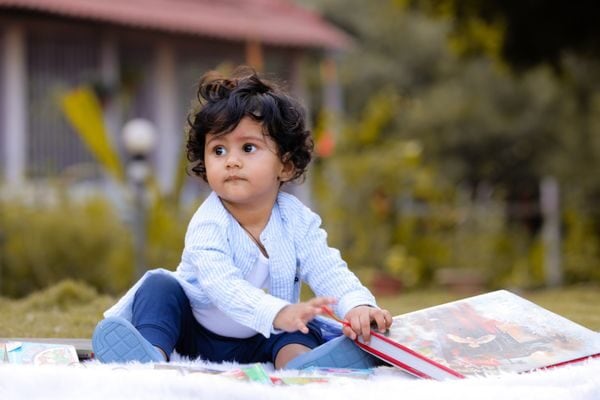
At this age, reading is about closeness, your voice, and the rhythm of language. Babies love faces, high-contrast images, and simple photographs of everyday things. Sturdy board books they can hold and explore are ideal.
- Black on White and White on Black by Tana Hoban: Wordless board books of simple silhouettes of everyday objects and animals in stark black and white. Expect your baby to gaze intently; these are among the first pictures a newborn can truly focus on.
- Global Babies by the Global Fund for Children: Photographs of babies from cultures around the world, with a few gentle lines of text. Expect your baby to study each face, and expect a quiet reminder that families everywhere love and care for their little ones.
- Ten Little Fingers and Ten Little Toes by Mem Fox: A rhyming story about babies born in different places, each with ten fingers and ten toes, illustrated by Helen Oxenbury. Expect a soothing rhythm you will soon know by heart.
- Everywhere Babies by Susan Meyers: Lilting verse about everything babies do, from eating and sleeping to playing and being loved, with warm illustrations by Marla Frazee showing many kinds of families. Expect your child to recognize their own daily life on every page.
- Photographic word books of everyday objects, such as those published by DK: Clear, labeled photographs of familiar things like a cup, a ball, or a shoe. Expect pointing first, and before long, naming.
Why these books? Each one meets a baby's developing senses. Newborns see high contrast best, babies are naturally drawn to human faces, and the rhythm of rhyme helps them tune in to the sounds of their language long before they speak. Just as important, every book here shows real babies, real families, and real objects, the very things your child is coming to know.
Don't worry if your baby chews the book or turns the pages too soon. That's exploring, and it counts.
Toddlers (18 Months to 3 Years)
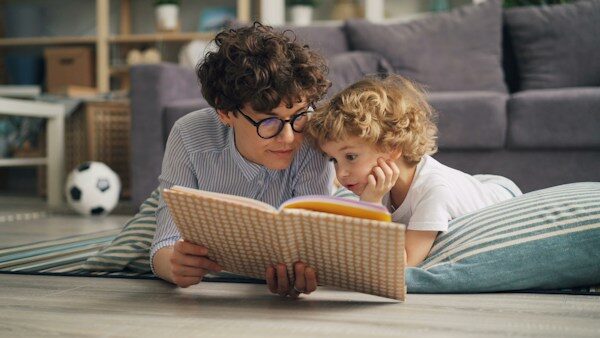
Toddlers are building language at an astonishing pace. They want to name everything. Books with clear pictures of familiar objects, simple stories about daily life, and repetition they can predict are perfect. Let them point, name, and "read" to you.
Don't be surprised if your toddler asks for the same book again and again. Repetition is exactly how language takes hold. Author Mem Fox, whose Reading Magic appears in my list for parents below, puts it memorably: "Children need to hear a thousand stories before they can begin to learn to read." She adds that hearing the same story a thousand times counts, too.
- The Snowy Day by Ezra Jack Keats: Peter wakes to fresh snow and spends the day exploring it, making tracks, building a snowman, and sliding down a hill. Expect quiet wonder; few books capture a child's joy in discovery so simply. It won the Caldecott Medal in 1963.
- Freight Train by Donald Crews: A colorful train rolls across the pages, car by car, through tunnels and over trestles. Expect your toddler to learn colors and the names of train cars, and to ask for it again and again. It is a Caldecott Honor Book.
- Shapes, Shapes, Shapes and other photo books by Tana Hoban: Photographs of everyday scenes full of circles, squares, and triangles, with almost no words. Expect a game of "find the shape" that carries over into your walks together.
- Peter's Chair by Ezra Jack Keats: Peter has a new baby sister and watches his old things being painted pink for her, until he discovers he has outgrown his little chair and decides to share. Expect a natural conversation about feelings, especially if a new sibling is on the way.
- Simple nonfiction about animals, vehicles, and food: Clear photographs and plain words about the things toddlers see every day. Expect your child to connect the page to life, spotting the dog in the book and then the dog at the park.
Why these books? Toddlers learn best through experiences they recognize. These stories show children doing real things, such as playing in the snow, watching a train, or adjusting to a new baby, so your child can connect what happens on the page to their own life. They also build the vocabulary of colors, shapes, and everyday objects that toddlers are so eager to name.
A tip: keep just a few books out at a time on a low shelf, facing forward so your child can see the covers. Rotate them every week or two. Fewer choices help a toddler focus and return to favorites.
Young Primary (Ages 3 to 4)
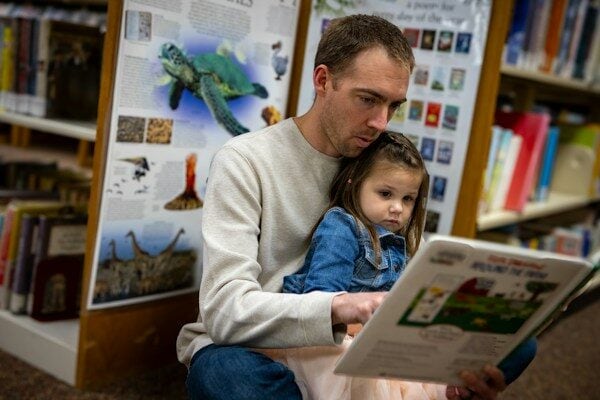
Three- and four-year-olds are curious about how things work and why. This is a lovely time for gentle stories about real families and real experiences, along with nonfiction about nature and growing things.
- Blueberries for Sal by Robert McCloskey: Little Sal and her mother go blueberry picking on a hill in Maine, where a bear cub and its mother are doing the very same thing, and the pairs get mixed up. Expect gentle suspense, a happy ending, and a sudden craving for blueberries. It is a Caldecott Honor Book.
- The Carrot Seed by Ruth Krauss: A little boy plants a carrot seed, and everyone tells him it won't come up. He waters and weeds it anyway. Expect a short but powerful lesson in patience and in believing in your own work.
- From Seed to Plant by Gail Gibbons: Clear illustrations explain how seeds form, travel, and grow into new plants. Expect real science told simply, along with ideas your child can try at home.
- The Listening Walk by Paul Showers: A girl, her father, and their dog take a walk and listen to every sound along the way. Expect your child to begin hearing the world differently and inventing sound words of their own.
- Owl Moon by Jane Yolen: A child and Pa walk into the snowy woods on a winter night, hoping to see an owl. Expect hushed, beautiful language and a lesson in quiet patience. It won the Caldecott Medal in 1988.
Why these books? In our classrooms, three- and four-year-olds are refining their senses, caring for plants, and learning to wait and to persevere. These books mirror that work. They invite children to listen closely, notice the natural world, and see that patience and effort bring results. Each one is also beautifully written, offering the rich language young children love to borrow.
After reading, connect the book to life. Plant a seed after The Carrot Seed. Take a quiet listening walk around the block. This is where reading becomes understanding..
Older Primary (Ages 5 to 6)
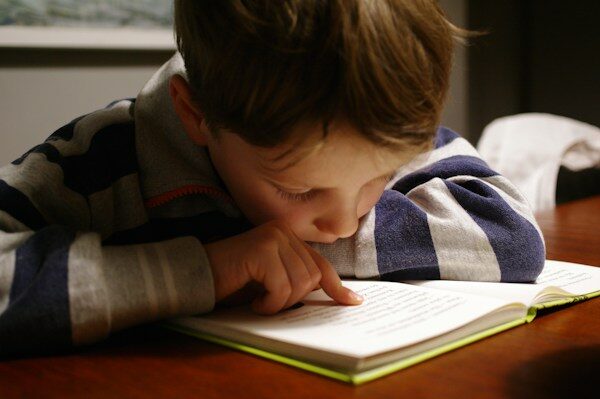
By ages five and six, many children are beginning to read on their own, and their world is opening wide. They're ready for longer stories, more detailed nonfiction, and books about people who made a difference. Keep reading aloud, even after your child can read. Hearing books slightly above their own reading level builds vocabulary and comprehension remarkably well.
The research bears this out. A 2019 Ohio State University study led by Jessica Logan estimated that children who are read five books a day hear about 1.4 million more words by kindergarten than children who are never read to. Even one book a day adds roughly 290,000 words.
- Miss Rumphius by Barbara Cooney: Alice Rumphius travels the world, settles by the sea, and finally fulfills her grandfather's charge to make the world more beautiful by planting lupines. Expect a meaningful conversation about how your child might make the world more beautiful, too.
- A Chair for My Mother by Vera B. Williams: After a fire, a girl, her mother, and her grandmother save coins in a big jar to buy a comfortable chair. Expect tender talk about family, community, and saving toward a goal. It is a Caldecott Honor Book.
- Ox-Cart Man by Donald Hall: Over the course of a year in early New England, a farmer and his family make and grow goods, sell them at market, and begin again. Expect a lovely introduction to the seasons, honest work, and where things come from. It won the Caldecott Medal in 1980.
- Up in the Garden and Down in the Dirt by Kate Messner: A girl and her grandmother tend a garden through the seasons while the book reveals the busy life underground. Expect wonder at worms, roots, and everything that grows out of sight.
- If You Find a Rock by Peggy Christian: Photographs of children with rocks of every kind, from skipping rocks to wishing rocks. Expect your child to start a rock collection.
- National Geographic Little Kids First Big Book of Animals: Vivid photographs and simple facts about animals from around the world. Expect endless questions and a child who loves to share what they have learned.
Why these books? Five- and six-year-olds are ready to look beyond themselves. In Montessori, this is the age when children begin exploring the wider world through geography, botany, zoology, and the story of how people live. These books open those doors. They show how people work, how communities care for one another, and how the natural world fits together, all while modeling kindness, perseverance, and wonder.
Children this age love to talk about what they read. Ask open questions: "What do you think she felt?" or "What would you have done?" Then really listen..
Books for Parents
Some of the most important reading in a child's life happens on the parent's nightstand. These books have helped many families understand the Montessori approach and bring it home.
- The Absorbent Mind by Maria Montessori: Dr. Montessori's own lectures on how children develop from birth to age six. Expect a rich but demanding read, best taken a chapter at a time.
- The Secret of Childhood by Maria Montessori: Her reflections on the inner life of the young child and the sensitive periods of development. Expect insights that may change how you see your child's everyday behavior.
- Montessori from the Start by Paula Polk Lillard and Lynn Lillard Jessen: A practical guide to Montessori at home from birth to age three. Expect concrete ideas for preparing your home and encouraging independence from the very beginning.
- The Montessori Toddler by Simone Davies: A friendly, practical handbook for life with a toddler. Expect simple activities, ideas for your home, and calm strategies for everyday challenges.
- How to Raise an Amazing Child the Montessori Way by Tim Seldin: A clear, generously illustrated introduction for parents of young children. Expect practical ideas you can put to use right away.
- Montessori: The Science Behind the Genius by Angeline Stoll Lillard: Dr. Lillard connects Montessori principles to modern research on how children learn. Expect a thoughtful, evidence-based read for the parent who wants to know why it works.
- The Read-Aloud Handbook by Jim Trelease: Why reading aloud matters and how to do it well, along with a long list of recommended titles. Expect a resource you will return to for years.
- Reading Magic by Mem Fox: A short, warm, and persuasive book on the power of reading aloud. Expect to finish it in an evening and want to read to your child right away.
Why these books? Each one helps parents do at home what we do in the classroom: observe the child, prepare the environment, and trust the child's natural desire to learn. Some explain the philosophy, some offer practical tools, and some simply renew your joy in reading aloud.
If you're just starting, I'd suggest Simone Davies or Tim Seldin first. Both are practical and warm. When you're ready to go deeper, turn to Dr. Montessori's own writing.
If you wonder whether the Montessori approach truly makes a difference, Dr. Angeline Lillard's research is worth knowing. In a 2006 study published in Science, she found that five-year-olds at a public Montessori school outperformed their peers in letter-word identification and word decoding, two key early reading skills.lls.
A Treasure Just Down the Street
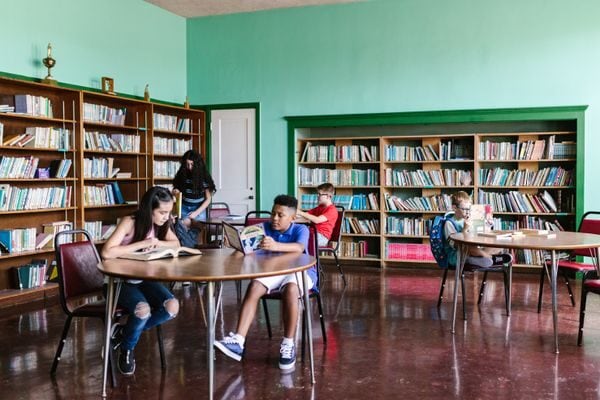
One of the joys of our location is that Kinder Haus sits just down the street from the Jefferson Parish Library – East Bank Regional Library at 4747 W. Napoleon Ave., Metairie, LA 70001. It is the largest library in the Jefferson Parish system and home to the system's largest reference collection. Its children's wing is a wonderful place for young readers, with a generous selection of books and regular story hours. The librarians there are knowledgeable and welcoming, and they are genuinely glad to help families find just the right book.
I encourage every family to make the library a regular part of family life. Regular visits teach children that books are treasures to be shared, cared for, and returned for others to enjoy. Choosing their own books gives children the independence that Montessori values so deeply, and story time introduces them to new voices and new friends. Best of all, the library is free, so your home shelves can change as quickly as your child's interests do. Like most libraries today, it also offers digital book lending, so your family can borrow e-books and audiobooks from home.
Even Jessica Logan, whose word-gap study I mentioned above, points parents to the local library for age-appropriate books. If your family doesn't have a library card yet, make that first visit together. It is a small step that can begin a lifelong love of reading.
A Final Word
The best reading habit you can give your child doesn't come from a list. It comes from you, sitting close, reading every day, and showing that books matter in your home. Visit the library together. Let your child see you read. Keep books where small hands can reach them.
Child development specialist Dr. Siggie Cohen, in her new book You Are the Parent, encourages parents to lead with calm confidence and firm, loving boundaries rather than endless negotiation. I find that wisdom helps at bedtime, too. When your child pleads for "just one more story," a warm, predictable reading routine gives the comfort they are really asking for.
If you would like to see how we nurture a love of language and reading in our classrooms, we would be delighted to show you. Request a tour and come see Kinder Haus Montessori in action.
Sources
- American Academy of Pediatrics, "Literacy Promotion: An Essential Component of Primary Care Pediatric Practice," Pediatrics (2014; updated 2024). Summary
- Maria Montessori, The Absorbent Mind.
- Mem Fox, Reading Magic: Why Reading Aloud to Our Children Will Change Their Lives Forever.
- Jessica Logan et al., "When Children Are Not Read to at Home: The Million Word Gap," Journal of Developmental and Behavioral Pediatrics (2019). Ohio State summary
- Angeline Lillard and Nicole Else-Quest, "Evaluating Montessori Education," Science 313 (2006). PubMed
- Siggie Cohen, You Are the Parent (2026). WBUR interview