
Every October, the world sets aside a day for teachers. World Teachers' Day is the kind of observance that usually passes in a wave of thank-you notes and coffee mugs, and those are lovely. But the month is also a good occasion to answer a question we hear on almost every tour, usually near the end, usually a little hesitantly:
Who will actually be with my child — and how long will they stay?
It is the right question. Materials can be bought. You can arrange a classroom beautifully in an afternoon. The person who kneels beside your three-year-old at ten in the morning is the part you can't buy or rush, and she's what you are really choosing between when you compare one school with another.
So here is an honest account of what Montessori teacher training involves, what it does not, and how to tell the difference when you are standing in someone else's classroom.
Training is not a weekend workshop.
A Montessori teacher's preparation is closer to a conservatory education than to a professional development day. It is built around three things that take time to acquire.
The first is the materials themselves. A Montessori classroom holds hundreds of pieces of apparatus, and each one has a precise purpose, a sequence it belongs to, and a way it is presented. The pink tower is not a stack of blocks; it isolates one variable—size—so a child's hand and eye learn a concept before language is attached to it. Training means learning every one of these presentations, in order, and being able to give them without hurry. Teachers in training write and illustrate their own albums, which serve as working manuals for every lesson in their age range. Those albums take months. Teachers keep them for the rest of their careers.
The second is child development. Montessori training is grounded in a theory of how children change between birth and six — why a two-year-old needs order so badly that a shoe in the wrong place can undo her morning, why a four-year-old suddenly wants to write before he can read, why the same child who could not sit still at the start of the school year can hold ninety minutes of concentrated work a few months later. A trained teacher doesn't guess at these things. She has a framework for them.
The third, and the hardest, is observation. This is the part that surprises parents most. A great deal of Montessori training is spent learning to watch a child without intervening — to sit with a clipboard and record what a child chooses, how long he stays with it, where he struggles, and to resist the very strong adult urge to step in and fix it. The calm you feel when you walk into a settled Montessori classroom is not the teacher's temperament. It's trained restraint, and it took her years.
Training culminates in a supervised practicum: a full year, in a real classroom, under an experienced teacher, before a certificate is issued.

Three words that get used interchangeably, and should not be
This is where families get tangled, so let us be plain about it.
Accreditation is a formal review of an entire school by an outside body, against a published set of standards, on a repeating cycle. Membership means a school has joined an organization and pays its dues. Teacher training is a credential held by an individual, not a school.
These three things are entirely different, and a school can have any one of them without the others.
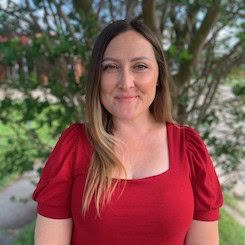
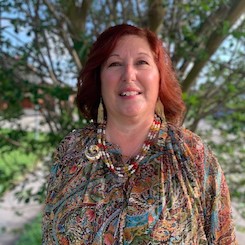
Kinder Haus Montessori does not hold AMS or AMI accreditation, and we will not imply that we do. What we have is this: we opened in 1984 and have been running continuously since; our lead teachers hold Montessori training certificates; and those teachers have stayed. Michele has been in her classroom for more than sixteen years—Danielle for more than twenty.
We would rather tell you that plainly than let a logo do the talking. If a school's answer to "what do you hold?" is vague, or slides from one word to another, that is worth noticing — not because the school is necessarily poor, but because you are entitled to a specific answer about something this important.
Why staying matters as much as training
We mention tenure in the same breath as credentials for a reason.
Early childhood education has a turnover problem, and it is not a small one. A child who begins at eighteen months and stays through kindergarten may pass through several rooms in five years. If the adults in those rooms change every year or two, the child spends a meaningful part of each year relearning everything.
The Montessori answer to this is structural: children stay in a mixed-age classroom for three years with the same teacher. That only works if the teacher is still there in year three. A teacher who has known your child since she was two knows things about her that no file records — which transitions are hard, which friend steadies her, what the face means just before the tears.
Sixteen years and twenty-plus years are not marketing statistics for us. It's why the three-year cycle actually works here.
What to ask on any tour
If you take nothing else from this, take these four questions. Ask them at every school you visit, ours included.
- How were the lead teachers in this room trained, and in what age range? Montessori training is age-specific. Infant and toddler preparation is not the same as primary preparation.
- How long have they been here? Then ask how long the average teacher stays.
- Does the school hold accreditation, membership, or neither — and by which body? Listen for whether the answer distinguishes between them.
- May I watch a work period? Not a tour of an empty room. A real morning, with children in it.
A school that is confident in its answers will give them without hedging. That confidence is itself information.
A word of thanks
October gives us a reason to say the ordinary thing, and mean it. To Michele, to Danielle, and to every teacher who has knelt on our floor since 1984 — thank you. The training is real, the years are real, and the children know your names.
If you would like to meet the people who would be with your child, we would be glad to show you the classrooms during a working morning. Request a tour, and we will welcome your visit.