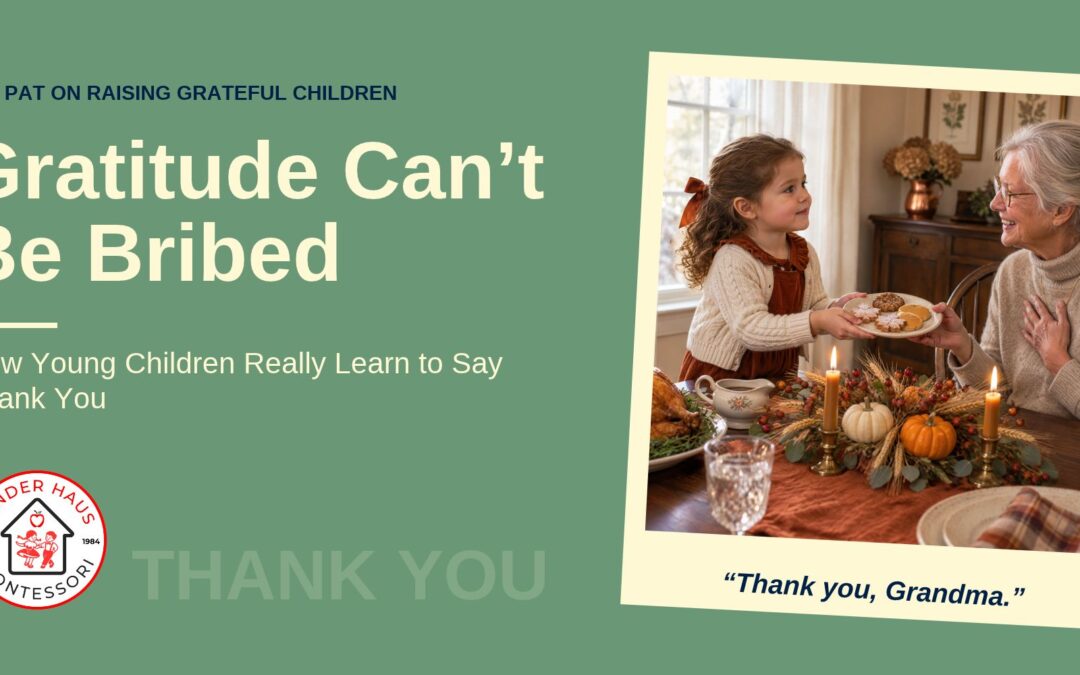
Every November I watch the same small scene at holiday tables. A grandmother hands a child a cookie, and before the child has taken a breath, an adult leans down and whispers, "What do you say?" The child says it. Everyone moves on. And the child has learned that "thank you" is a password adults require before the next thing can happen.
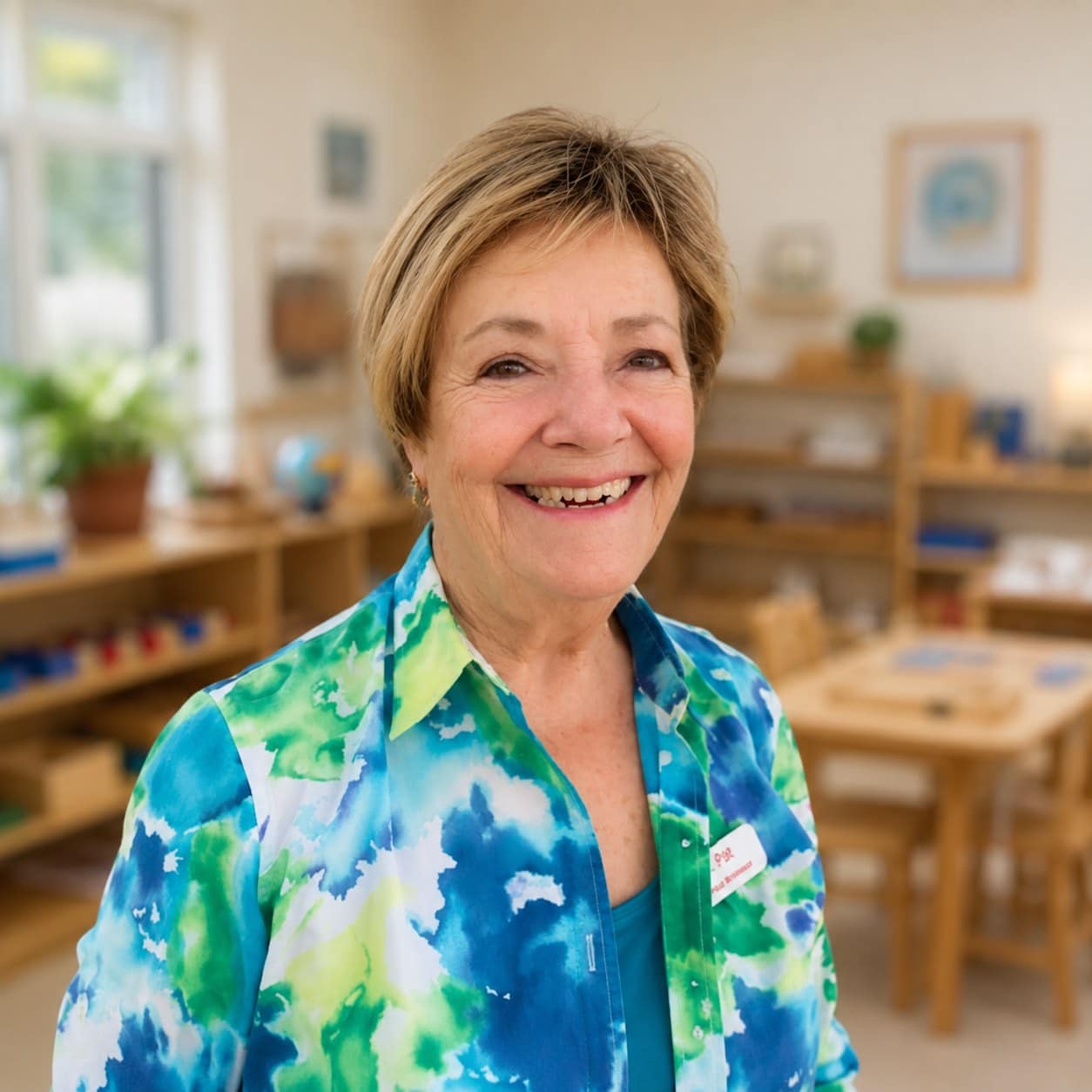
I first watched a Montessori classroom in Germany in 1975, and I have spent every year since 1984 with children ages 1 to 6 at Kinder Haus Montessori. If those years have taught me anything about gratitude, it is this: children cannot be pushed into it, and they certainly cannot be paid into it. They grow into it slowly, by living alongside adults who practice it every day.
What a Toddler Study Tells Us About Rewards
In 2008, two researchers at the Max Planck Institute for Evolutionary Anthropology, Felix Warneken and Michael Tomasello, ran a simple experiment with 20-month-old children. An adult would drop a marker or miss a basket, and the toddlers were free to help. Most did, eagerly, with no prompting at all.
Then the researchers changed one thing. Some children received a small toy each time they helped. Others received a warm word, or nothing. Later, when the rewards stopped, the children who had been given toys helped less often than the children who had been praised or simply left alone (Warneken & Tomasello, 2008). The authors concluded that even the earliest helping comes from within the child, and that material rewards can wear that motivation down.
Psychologists call this the overjustification effect. In plain words, when we pay a child for something she already wants to do, we teach her that the payment was the point.
Gratitude works the same way. A sticker for remembering "thank you" teaches the sticker, not the thanks.
Gratitude Grows in Everyday Conversation
If rewards don't build gratitude, what does? A research team from the University of North Carolina at Chapel Hill and Duke University has spent years on that question. In one study, parents kept a daily diary for a week, recording the small things they did to encourage gratitude and how often their child showed it. Parents who did more of these everyday things reported more frequent gratitude from their children across the week (Hussong et al., 2019).
The children in that study were 6 to 9 years old, a little older than ours, so I offer it as a direction rather than a promise. Still, it matches what I have seen for decades with younger children. Gratitude is not taught in one big lesson. It is absorbed in a hundred small ones. Children learn gratitude the way they learn language: by living inside it, every day, with adults who mean it.
Children learn gratitude the way they learn language: by living inside it, every day, with adults who mean it.
Ms. Pat
What Grace and Courtesy Looks Like in Our Classrooms
In a Montessori classroom, manners are not a list of rules taped to the wall. They are part of the curriculum, called grace and courtesy, and our teachers present them the same way they present a math material: slowly, clearly, and with plenty of chances to practice.
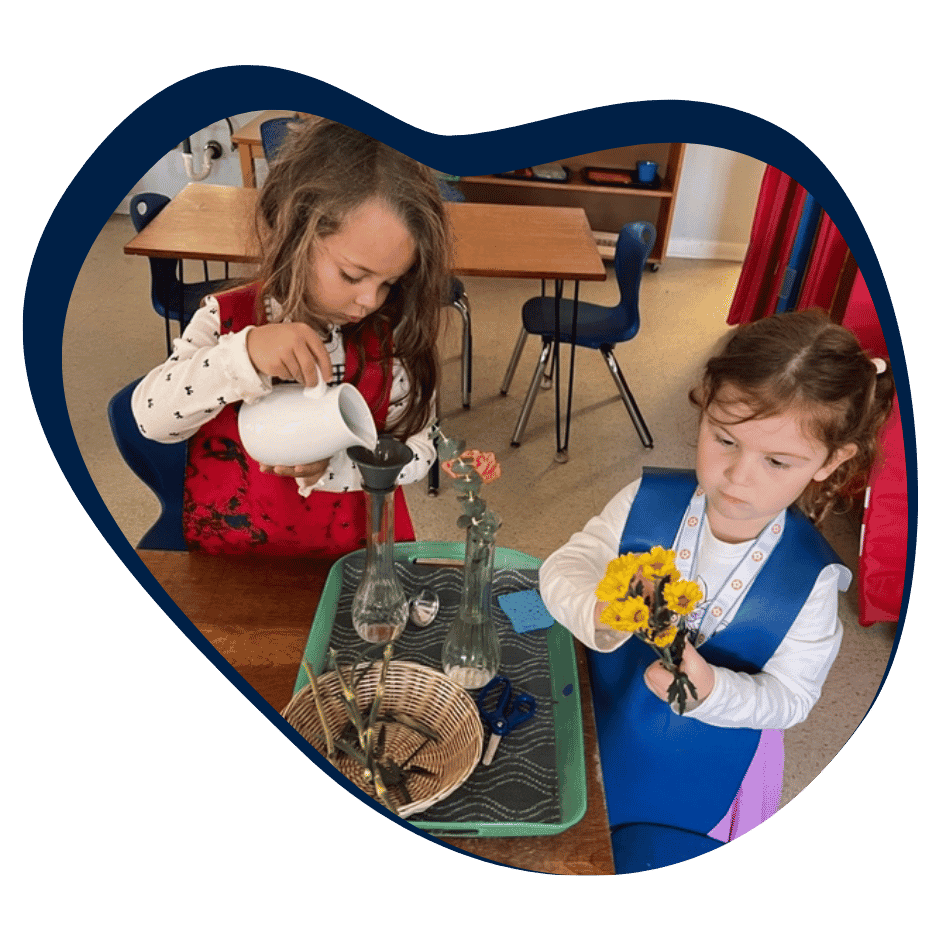
A teacher might show a small group how to offer a classmate a tray of crackers, how to wait while someone finishes speaking, or how to thank a friend who held the door. The children act it out, often with great seriousness. An hour later, they use it for real at snack time.
What you will not see is a teacher handing out stickers for good manners, or gushing over every polite word. Dr. Maria Montessori understood how easily adult attention can intrude on a child's own effort.
"Praise, help, or even a look, may be enough to interrupt him."
Dr. Maria Montessori, The Absorbent Mind (1949)
We want a child's thank-you to belong to her. So we model it, we give her the words, and then we step back and let her mean it.
Five Ways to Practice Gratitude at Home This Thanksgiving
- Thank your child, sincerely and specifically. "Thank you for carrying the napkins. That helped me get dinner on the table." Children give what they receive.
- Name the giver's effort, not only the gift. "Your aunt drove two hours to be here today." Gratitude begins when a child notices that someone chose to do something for her.
- Rehearse before the big day. Practice at dinner the night before: how to greet a guest, how to say thank you for a dish you don't care for. Rehearsal turns pressure into confidence.
- Give your child a real way to contribute. Setting the table, pouring water from a small pitcher, or folding napkins puts a child on the giving side of a celebration, not only the receiving side.
- Skip the prize, and skip the prompt when you can. If your child forgets, say it yourself ("Thank you, Grandma, these are delicious") and let the moment pass. A quiet example teaches more than a public correction.
A Gift That Lasts
Our tagline at Kinder Haus is "A Gift For Life," and gratitude may be the clearest example of what we mean. A thank-you that is coaxed out of a child lasts as long as the adult is watching. A thank-you that grows from a child's own noticing stays with her.
If you would like to see a grace and courtesy lesson in person, our teachers are always glad to show visiting families.
Sources
- Hussong, A. M., Langley, H. A., Rothenberg, W. A., Coffman, J. L., Halberstadt, A. G., Costanzo, P. R., & Mokrova, I. (2019). Raising grateful children one day at a time. Applied Developmental Science, 23(4), 371–384. https://doi.org/10.1080/10888691.2018.1441713
- Montessori, M. (1949). The Absorbent Mind. Quoted via the American Montessori Society, "Maria Montessori Quotes," amshq.org.
- Warneken, F., & Tomasello, M. (2008). Extrinsic rewards undermine altruistic tendencies in 20-month-olds. Developmental Psychology, 44(6), 1785–1788. https://doi.org/10.1037/a0013860
Kinder Haus Montessori has served children ages one through six in Metairie since 1984, welcoming families from Metairie, Kenner, New Orleans, River Ridge, and Lakeview.
This article is for general education. Every child develops at his or her own pace, and research findings describe groups of children, not any individual child.